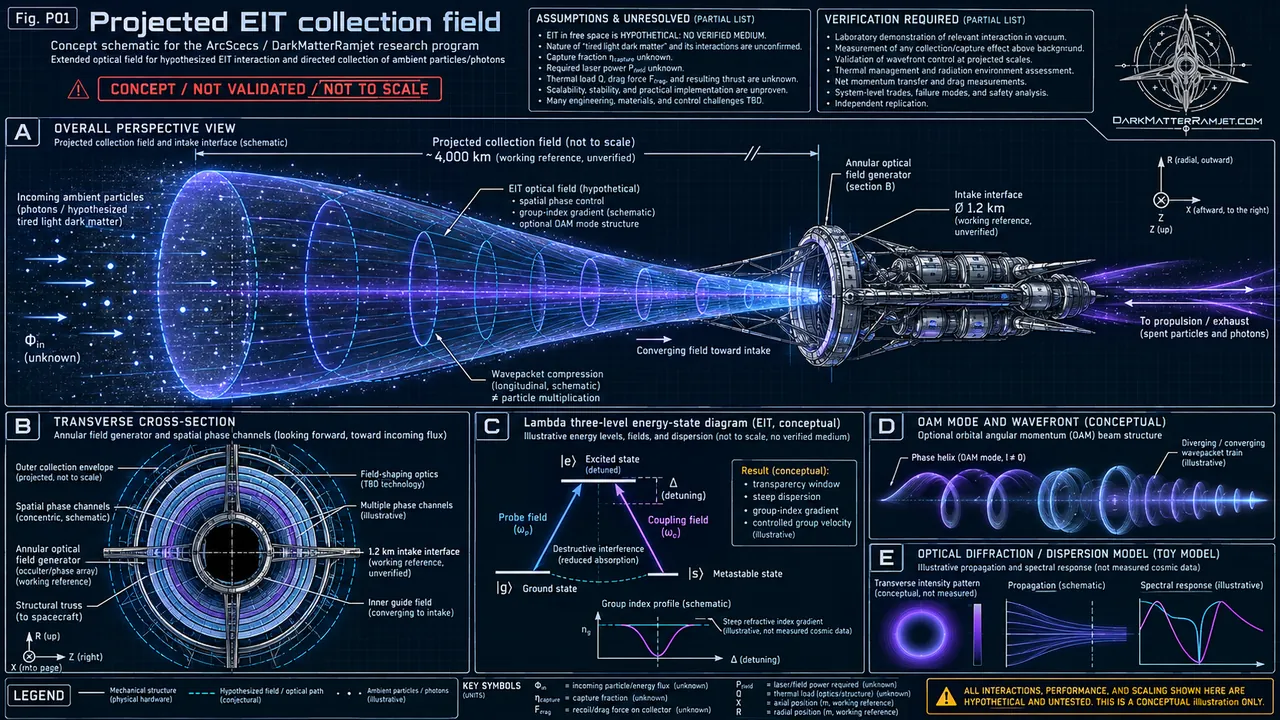
Projected intake field
A proposed wide capture field gathers ambient low-energy substrate into inward trajectories.
Research caveat: Hypothetical large-scale field coupling.READ SYSTEM GUIDE ↗ VIEW SCHEMATIC ↗An eight-stage thought experiment modeled as a continuous flow—capture, protect, condition, compress, buffer, re-energize, and exhaust.
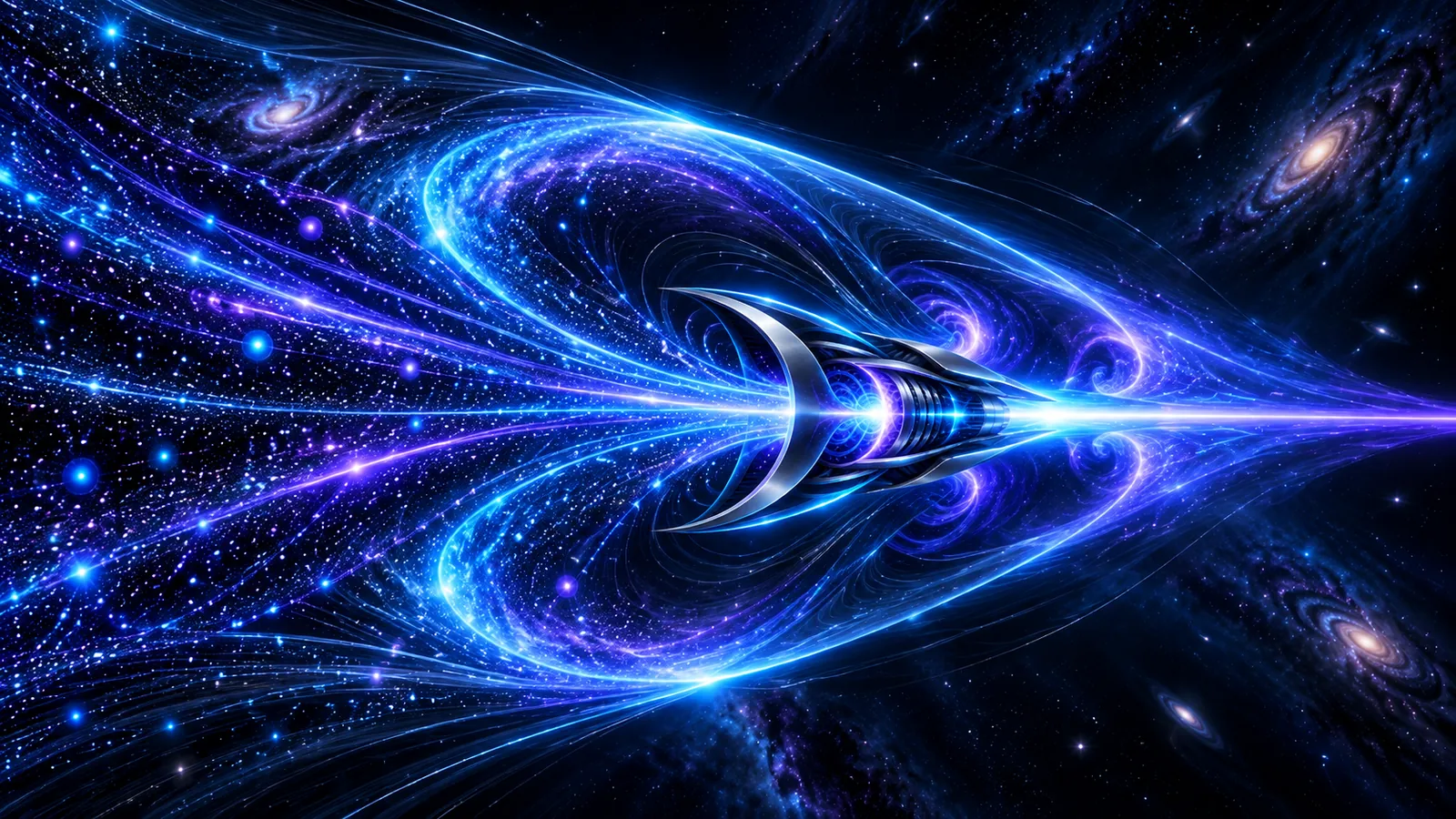
A proposed wide capture field gathers ambient low-energy substrate into inward trajectories.
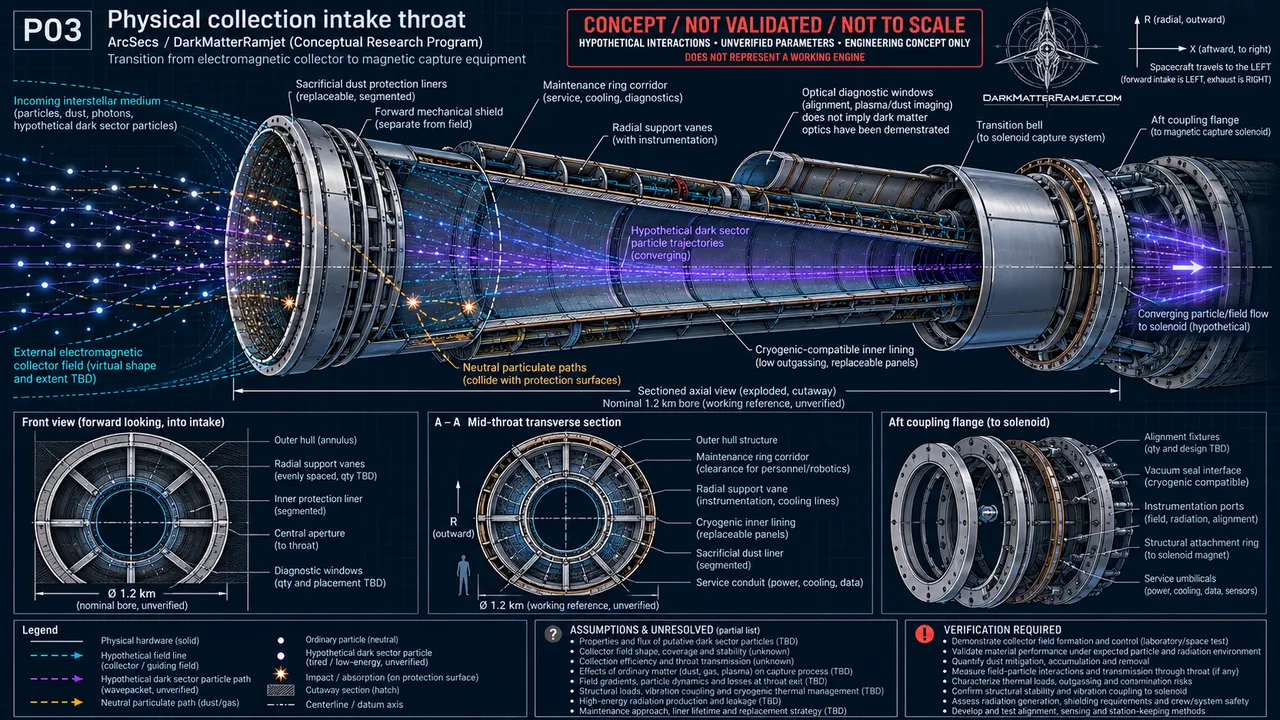
Research caveat: Hypothetical large-scale field coupling.READ SYSTEM GUIDE ↗ VIEW SCHEMATIC ↗A layered bow shield protects the vessel from ordinary gas, dust and energetic impacts.
Research caveat: Material architecture is conceptual.READ SYSTEM GUIDE ↗ VIEW SCHEMATIC ↗The flow narrows into a controlled passage that conditions the incoming substrate.
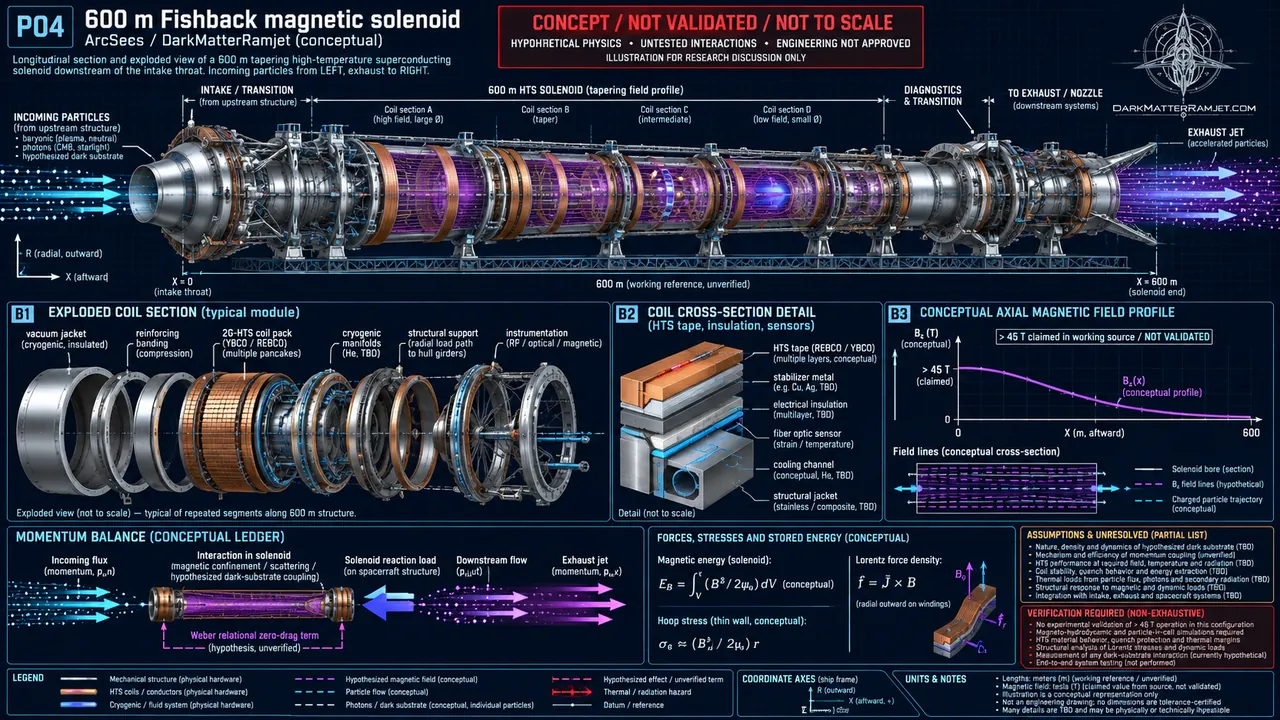
Research caveat: Substrate interaction is not established.READ SYSTEM GUIDE ↗ VIEW SCHEMATIC ↗Superconducting structures are proposed to shape incoming trajectories and reduce drag.
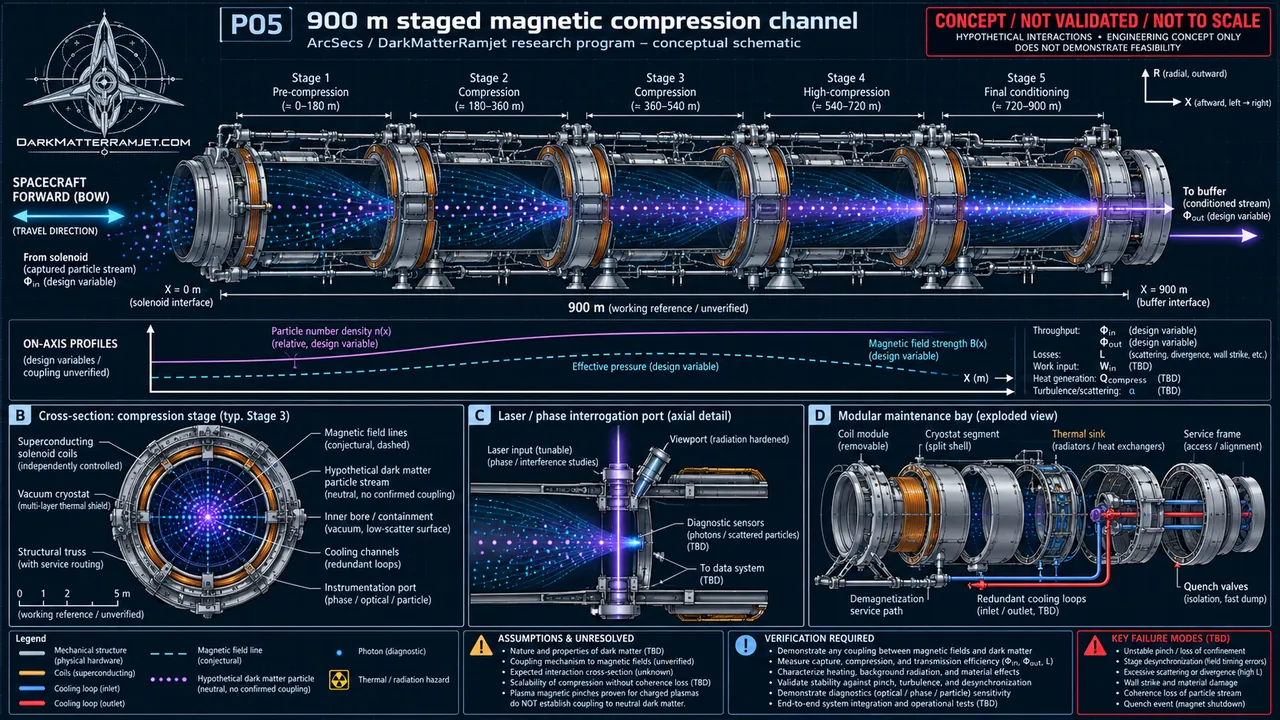
Research caveat: No validated drag-decoupling mechanism.READ SYSTEM GUIDE ↗ VIEW SCHEMATIC ↗A sequence of field gradients is imagined to concentrate the incoming mass flow.
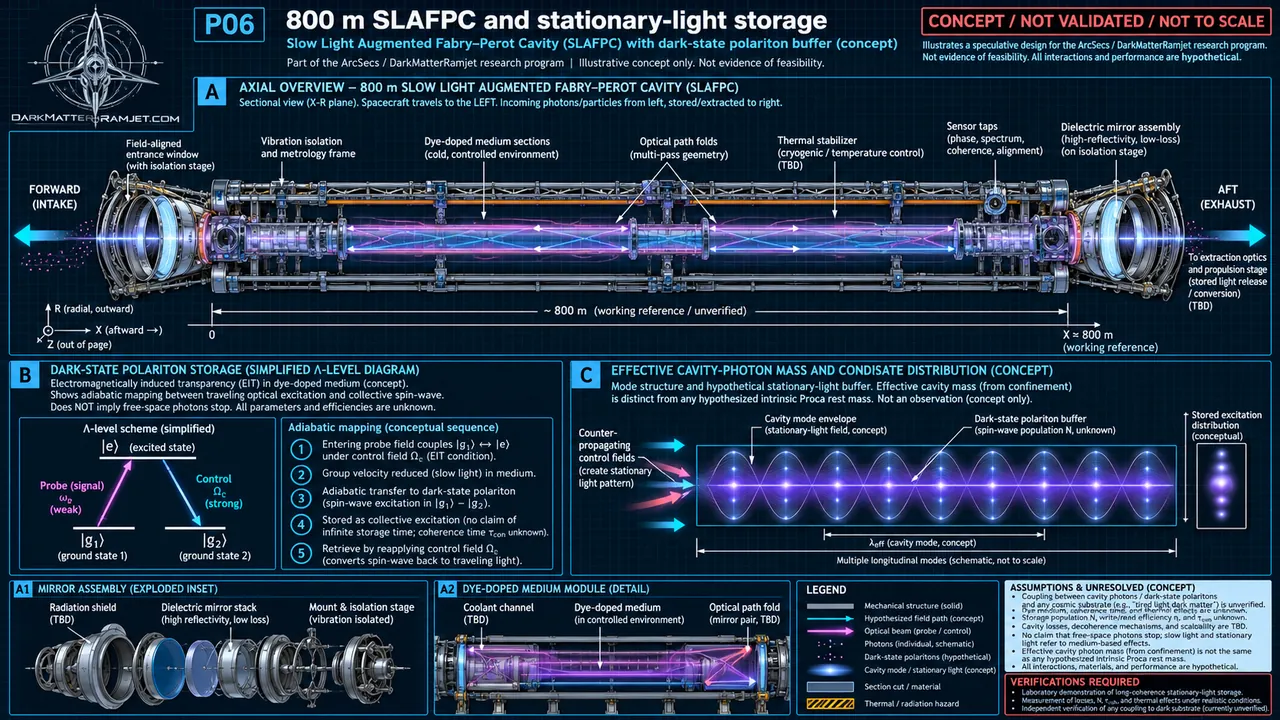
Research caveat: Energy costs and stability unquantified.READ SYSTEM GUIDE ↗ VIEW SCHEMATIC ↗A storage stage is inspired by dark-state polariton techniques in laboratory optical media.
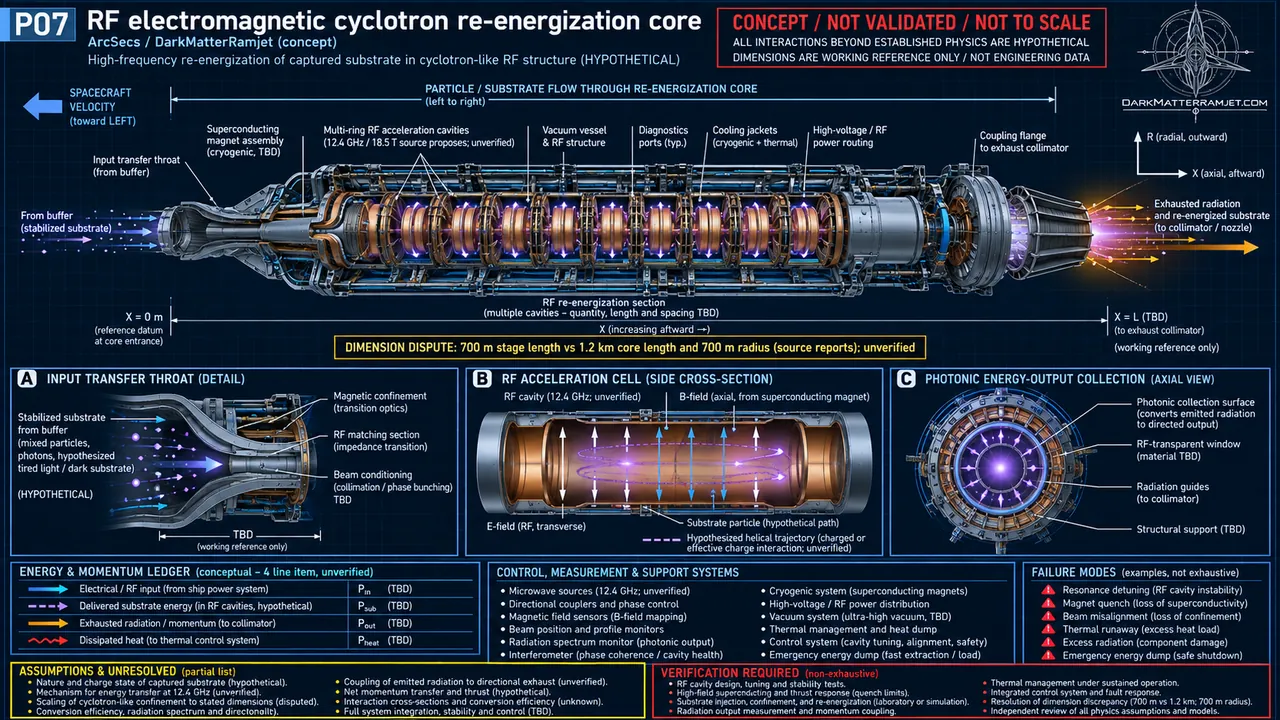
Research caveat: Bulk space application is speculative.READ SYSTEM GUIDE ↗ VIEW SCHEMATIC ↗The conceptual reactor converts captured low-energy material into high-energy output.
Research caveat: No demonstrated conversion reaction.READ SYSTEM GUIDE ↗ VIEW SCHEMATIC ↗An aft collimator directs energy and momentum into a narrow thrust-producing wake.
Research caveat: Net thrust depends on a real energy budget.READ SYSTEM GUIDE ↗ VIEW SCHEMATIC ↗Enter the interactive lab and explore the eight proposed stages.
Rule-based guide. No experimental claims or AI model calls.